

Temperature Sensors in Food Service: the KPI transforming safety and operations
The digital transformation of the food service industry has gone through many phases: digitising tasks, centralising records, automating expiry dates…
But now we’ve reached a turning point: temperature becomes a strategic KPI.
Not just a routine check.
Not just an HACCP requirement.
Not just another record.
In 2026, temperature sensors will become the core of food safety, operational efficiency and multi-site scalability.
And those who use them well will gain a clear competitive advantage.

What are temperature sensors in food service?
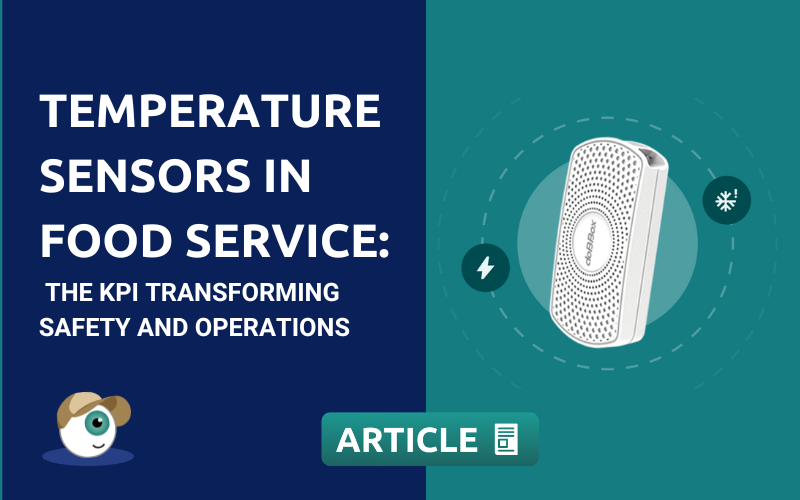
Temperature sensors in food service are
digital devices that continuously monitor the temperature of critical equipment (such as cold rooms, display units, freezers or ovens) and send
automatic alerts when they detect variations outside the safe range.
They replace manual readings, provide 24/7 automatic logging, improve
traceability, and allow teams to act before product loss or food safety risks occur.
Temperature Sensors in Food Service: the KPI transforming safety and operations
1. Temperature stops being a datapoint… and becomes a living KPI
For years, manual logs have done the bare minimum:
✔ A number
✔ A signature
✔ An auditor’s OK
But that doesn’t show behaviour, trends or real risk.
With connected sensors:
- You monitor 24/7
- You detect anomalies before they happen
- You identify patterns (spikes, drops, abnormal cycles)
- You make evidence-based decisions
Temperature stops being static data → and becomes a dynamic performance indicator.
2. No more surprises: real-time alerts that prevent losses and risks
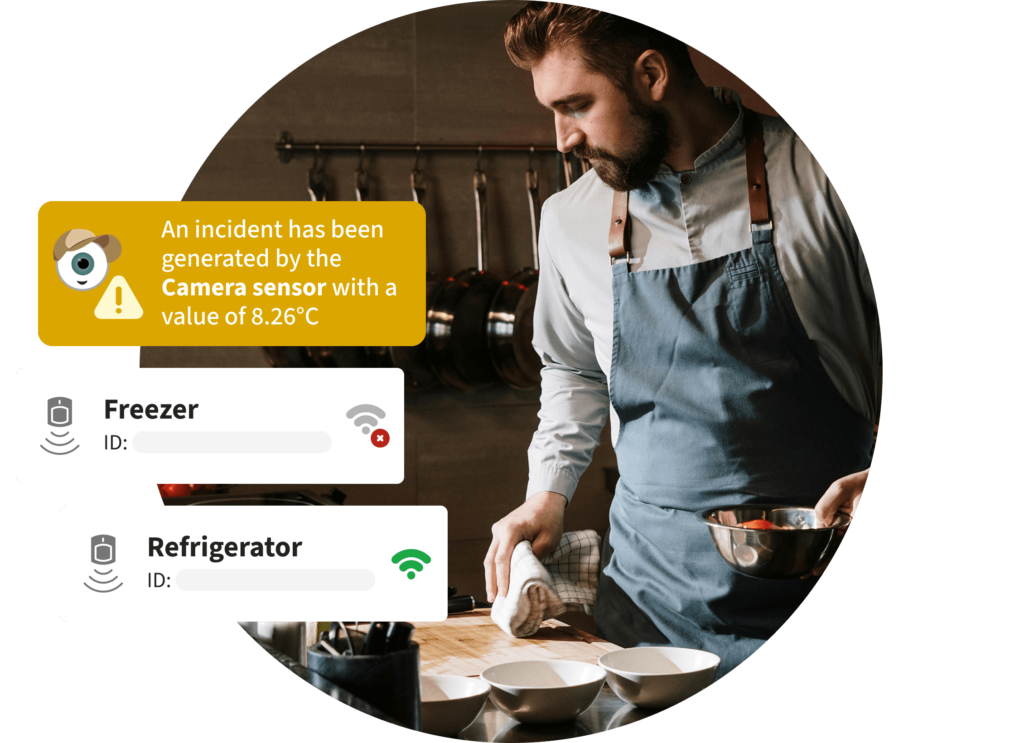
A fridge hits 9ºC at 3 a.m.
Without sensors: no one notices until 8 a.m.
And by then, it’s too late.
With sensors:
⚡ Immediate alert
⚡ Time to react
⚡ Product saved
⚡ Issue documented
2026 demands immediate action — not late discoveries.
3. Less waste, fewer losses: direct impact on costs
Temperature failures create hidden losses the sector massively underestimates.
Sensors =
- less product thrown away
- less reprocessing
- fewer complaints
- fewer failed audits
- fewer “if only we’d known sooner…” moments
Every alert prevents a cost. Every datapoint protects margin.
4. Expiry dates + temperature: the most powerful alliance of 2026
Smart expiry dates are great.
But they’re useless if a product spent two hours outside the safe range.
In 2026, leading teams will integrate:
✔ sensors
✔ expiry data
✔ traceability
✔ evidence
✔ rapid decision-making
The temperature + time integration will become the industry standard.
5. Easier audits: clean, structured and contextualised data
Auditors have already begun asking for:
- continuous evidence
- automatic logs
- tamper-proof data
- temperature graphs
- incident tracking
And 2026 will go even further.
With connected sensors, you can provide:
- full temperature history
- spikes and corrective actions
- alerts and responses
- complete system continuity
It is, literally, your audit insurance policy.
6. Multi-site operations: one dashboard to see everything
If you manage multiple locations, you already know this:
👉 10 fridges × 5 sites = 50 risk points.
With sensors in 2026:
- all equipment appears in a single dashboard
- unified alerts
- colour-coded risk levels
- clear priority order
- the ability to respond from anywhere
This is operating with a global view — not site by site.
7. Predictive maintenance: detecting failures before they happen
Most equipment shows signs of failure weeks before breaking down:
- temperature fluctuations
- unusual cycles
- overworked compressors
Sensors = early diagnosis → preventive maintenance → fewer breakdowns.
2026 will reward the teams that combine sensors + maintenance + tasks → machines that don’t fail.
8. A more confident, less stressed team: more control, less mental load
Sensors remove huge mental pressure:
❌ no more “remember to take readings”
❌ no dependence on shifts
❌ no risk of losing evidence
❌ no personal liability stress
The 2026 culture:
👉 the team executes
👉 the system monitors
This reduces anxiety, errors and operational noise.
If 2024 and 2025 were the years of digitising processes…
2026 will be the year temperature becomes the most powerful KPI in food service.
Temperature sensors are not a gadget.
They are the backbone of modern food safety.
And the brands that integrate them well will be the safest, most consistent and most efficient in the industry.
Control temperature like never before.
👉 Discover Andy’s sensors and enter the new era of food service 2026.
